
USA
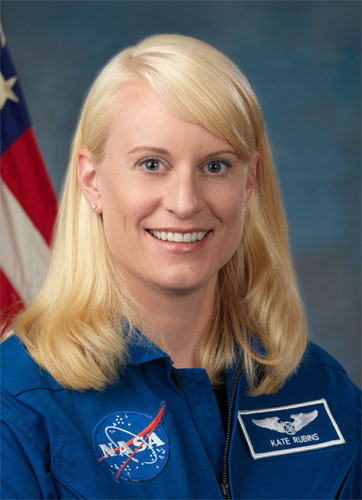
Kathleen Rubins
(Kathleen Hallisey Rubins)
(Oct 14, 1978)
Astronaut 545
Astronaut of the USA 336
Woman-astronaut 60
EVA astronaut 219
EVA astronaut of the USA 136
Spaceflights 2
EVAs 4
Spaceflights
| No. | Launch | Orbiter | Duration |
| 1st | Jul 07, 2016 | Soyuz MS-01 - ISS-48/49 | 115 d 2 h 22 m 32 s (2762 h 22 m 32 s) |
| 2nd | Oct 14, 2020 | Soyuz MS-17 - ISS-63/64 | 184 d 23 h 10 m 8 s (4439 h 10 m 8 s) |
| Cumulative time: | 300 d 1 h 32 m 40 s (7201 h 32 m 40 s) | ||
EVAs
| No. | Date | Orbiter | Duration |
| 1st | Aug 19, 2016 | ISS USA | 5 h 58 m |
| 2nd | Sep 01, 2016 | ISS USA | 6 h 48 m |
| 3rd | Feb 28, 2021 | ISS USA | 7 h 4 m |
| 4th | Mar 5, 2021 | ISS USA | 6 h 56 m |
| Cumulative time: | 26 h 46 m | ||
NASA astronaut and microbiologist Kate Rubins concluded her tenure at the agency on Monday, July 28, 2025, after 16 years of service. During this time, she completed two long-duration missions to the International Space Station, spending a total of 300 days in space and conducting four spacewalks.
Rubins’ first mission to the orbital laboratory began on July 7, 2016, as part of the inaugural test flight of the new Soyuz MS-01 spacecraft. As a member of the Expedition 48 and Expedition 49 crews, she participated in over 275 scientific experiments, including research in molecular and cellular biology. Notably, she became the first person to sequence DNA in space. Her work contributed to significant advancements in areas such as in-situ molecular diagnostics aboard the station, long-term cell cultivation, and the development of tools and methodologies for molecular biology—including technologies for handling small volumes of liquids in microgravity. Rubins also oversaw the integration and deployment of biomedical equipment on the space station, which helped ensure the health of the crew and facilitated scientific research both in space and on Earth.
On October 14, 2020, she returned to space aboard the Soyuz MS-17 spacecraft, launching from the Baikonur Cosmodrome in Kazakhstan to take part in Expeditions 63 and 64. Together with other crew members, Rubins spent hundreds of hours working on new experiments and continuing scientific research—notably studying heart function and conducting numerous microbiological experiments. Furthermore, she continued research into DNA sequencing in space; such technologies could one day enable astronauts to diagnose illnesses or identify microorganisms developing aboard the space station or during future exploration missions.
In addition to her spaceflight experience, Rubins served as the acting deputy director of NASA’s Human Health and Performance Directorate, where she contributed to developing strategies for maintaining crew health and conducting biomedical research. More recently, she has also been involved in the development of next-generation spacesuits for use on the Moon, helping to prepare for future missions under the Artemis program.
Before being selected for the astronaut corps in 2009, Rubins earned a bachelor’s degree in molecular biology from the University of California, San Diego, and a doctorate in cancer biology from the Stanford University School of Medicine (within the departments of biochemistry and of microbiology and immunology). Upon returning from her second spaceflight, Rubins joined the U.S. Army Reserve with the rank of major, serving as a microbiologist in the Medical Service Corps. She currently holds the position of innovation specialist within the “MedBio” unit of the 75th Innovation Command of the U.S. Army Reserve, headquartered in Boston.
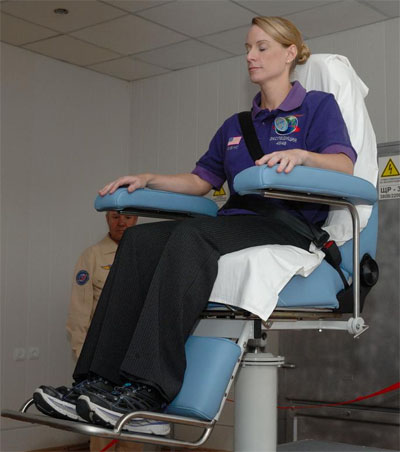
Kathleen Rubins before the flight.
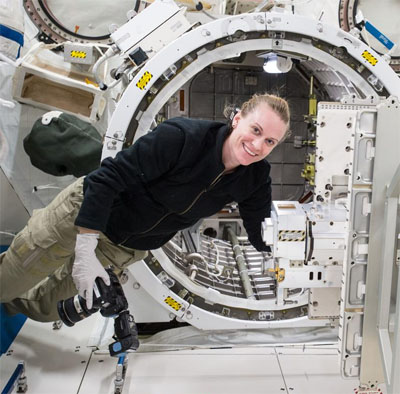
Kathleen Rubins in Kibo module ISS.
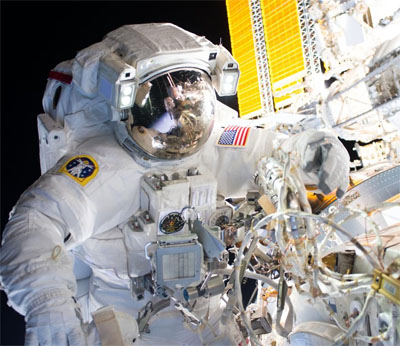
Kathleen Rubins in outer space.
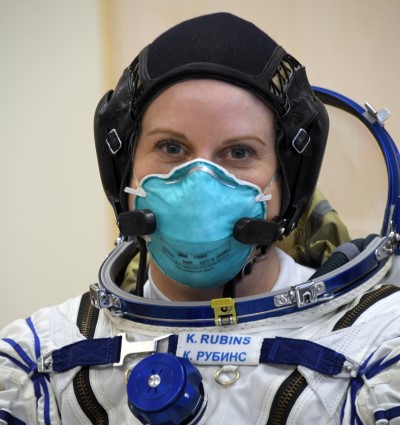
Kathleen Rubins before the srcond flight.
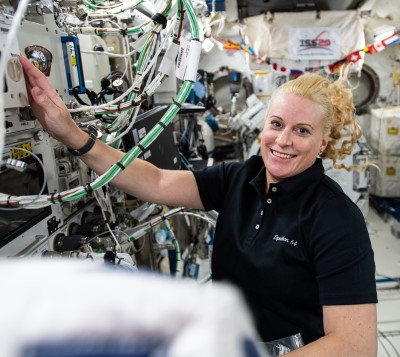
Kathleen Rubins - srcond spaceflight.
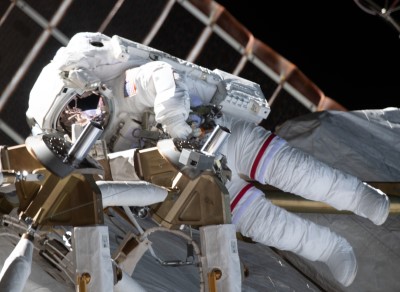
Kathleen Rubins during a spacewalk.
28.02.2021.
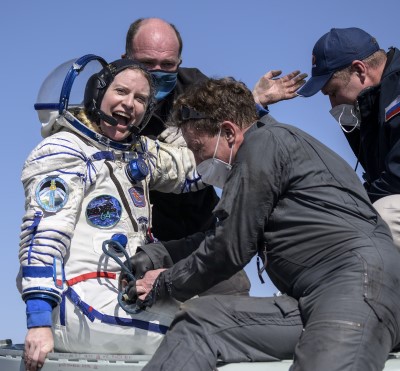
Kathleen Rubins after landing.
17.04.2021.
 Astronaut of the USA 335
 Astronaut of the USA 337
 Astronaut 544
Astronaut 546

 2001 Antropos.